
(通讯员:刘燕娇)为进一步开拓师生国际化学术视野,紧跟生成式人工智能教育发展前沿,全面提升外语专业学子的综合素养与科研能力,2026年6月12日下午,william威廉中文在图书馆一号报告厅举办光谷学术论坛专题讲座。本次活动特邀新加坡国立大学资深教育专家LEE Kooi Cheng、Soo Yuen Jien两位教授莅临讲学,计算机与人工智能学院、william威廉中文师生到场聆听学习。讲座由william威廉中文院长刘晖主持。
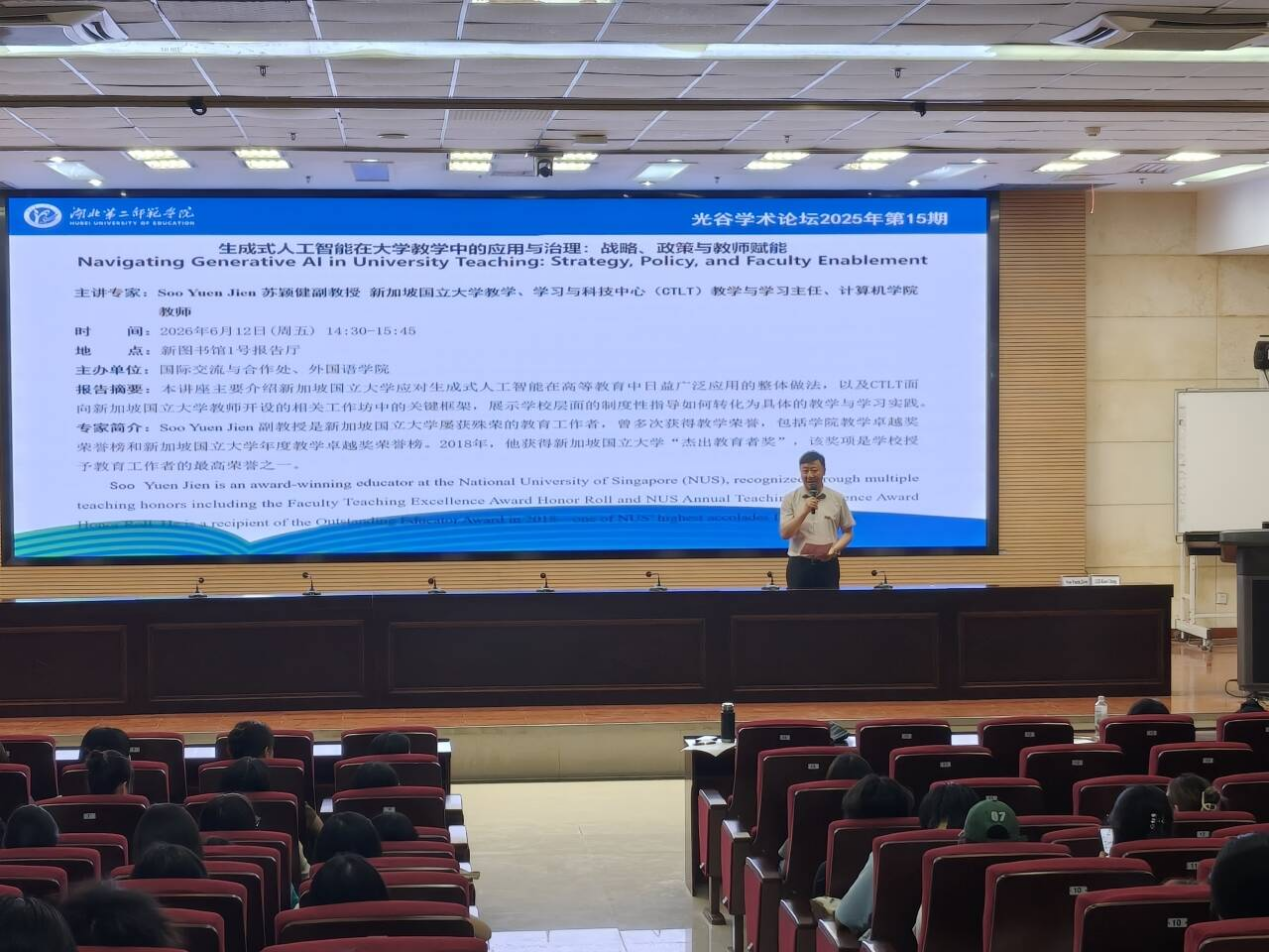
本场讲座分为上下两个环节,内容层层递进、环环相扣,全方位聚焦人工智能赋能高校教学全流程、全环节。
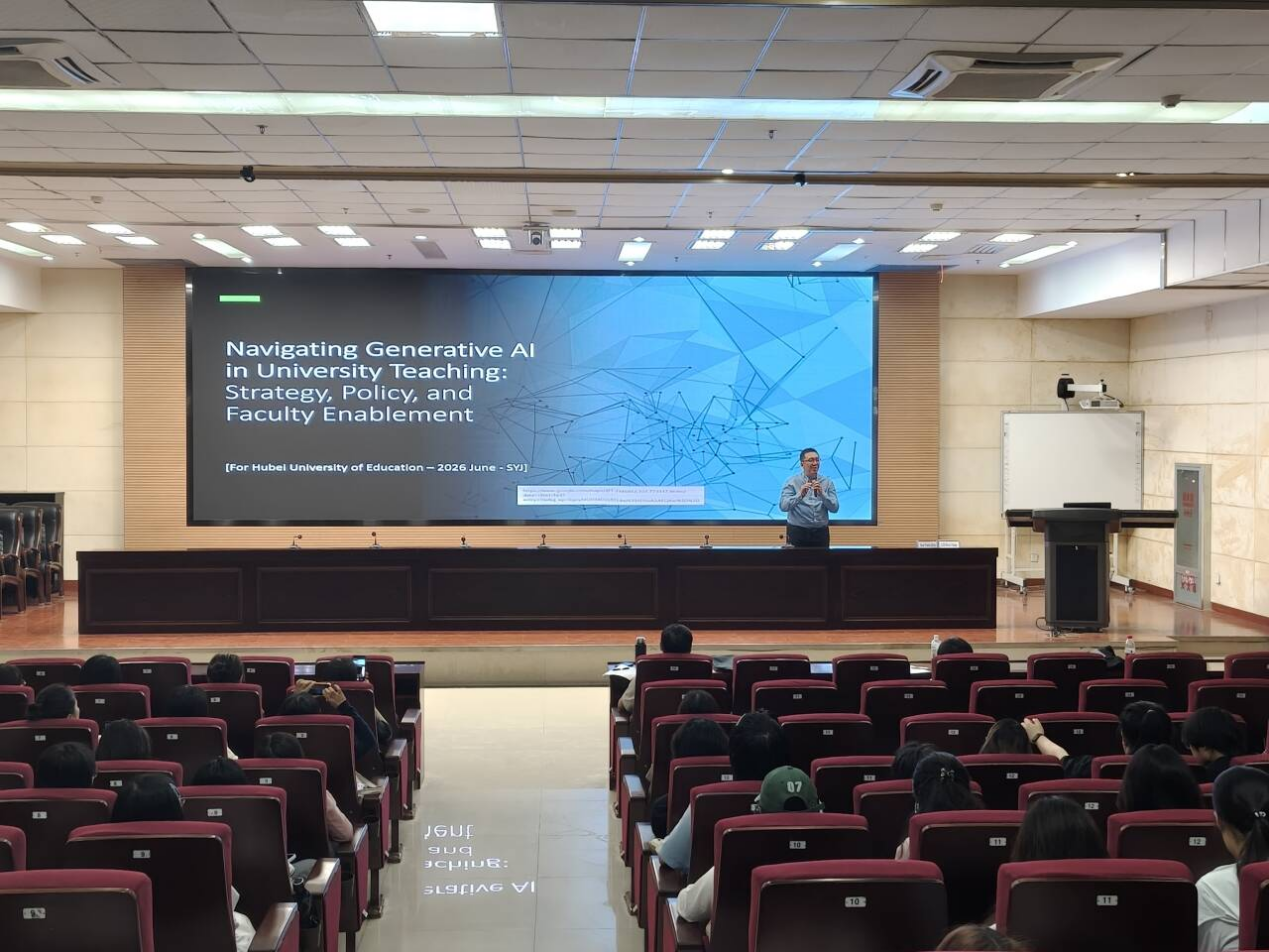
上半场,新加坡国立大学Soo Yuen Jien教授以“生成式人工智能在大学教学中的应用与治理:战略、政策与教师赋能”为题作主题分享。讲座伊始,他以新加坡课堂计算机逐步普及的发展历程为参照,梳理了新技术落地教育领域过程中社会与校方的政策演进逻辑,类比剖析当下生成式人工智能走进高校课堂面临的机遇与争议。随后,他系统解读了新加坡国立大学针对生成式人工智能普及应用制定的顶层战略体系,详细介绍学校教学与学习科技中心(CTLT)面向全体教师开设AI教学工作坊的落地举措,生动展示高校如何将宏观制度指引转化为可落地、可实操的课堂教学模式。作为校内多项顶级教学荣誉得主,Soo Yuen Jien教授结合多年一线教学与管理经验,围绕人工智能时代教师数字教学能力提升、课堂AI工具规范管理、教学评价体系改革等核心议题,分享了海外顶尖高校的成熟实践经验,为在场师生带来诸多启发。
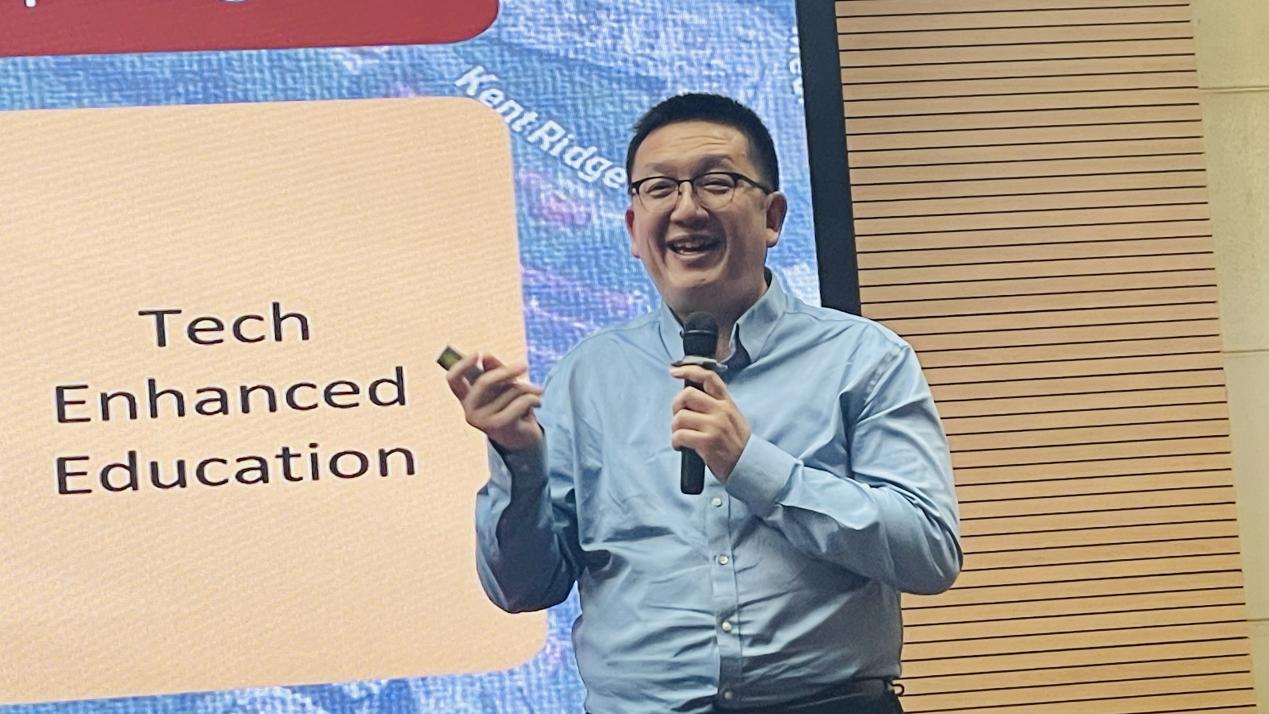
下半场,LEE Kooi Cheng教授带来“生成式人工智能工具融入英语教学中的教、学与评”专题报告,内容紧密贴合william威廉中文专业发展与人才培养特色。她依托一项ChatGPT英语写作评分对照实验展开深入讲解,设置三类不同提示词设计实验场景,对比学科专业人士与普通使用者优化AI生成文本的效果差异,清晰界定了人工智能工具在英语写作教学、标准化作文阅卷中的应用边界,并分享了对应的优化策略。结合英语阅读、写作、口语等真实课堂案例,LEE Kooi Cheng教授具体讲解了如何借助生成式人工智能高效完成课前备课、丰富课堂互动、落实课后分层评价。同时,针对AI写作抄袭、文本内容失真等教学难点,她分享了新加坡高校依托过程性评价、原创性核验机制化解问题的成熟方案,为外语教学发展提供了兼具实操价值与前瞻思维的新思路。
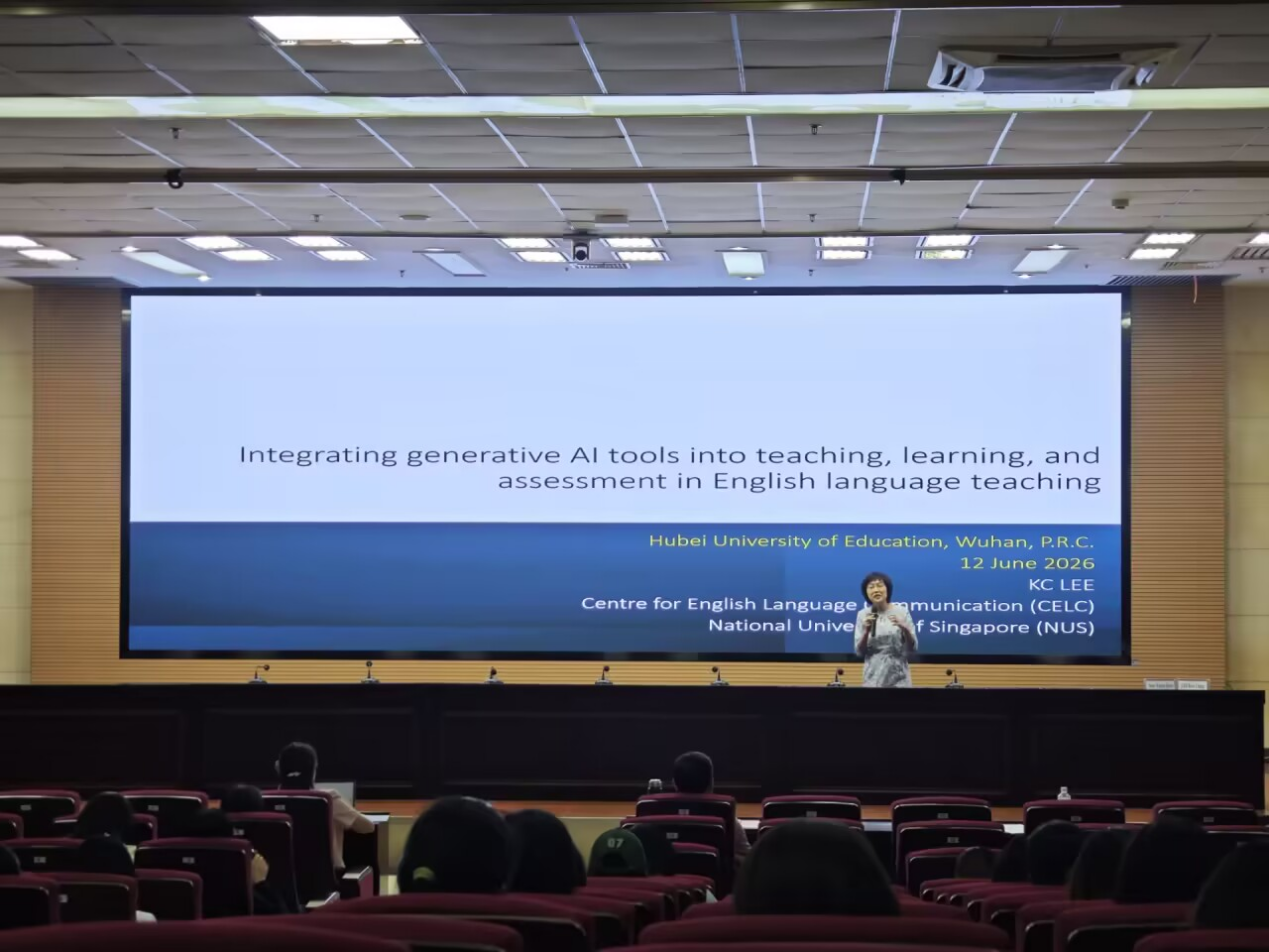
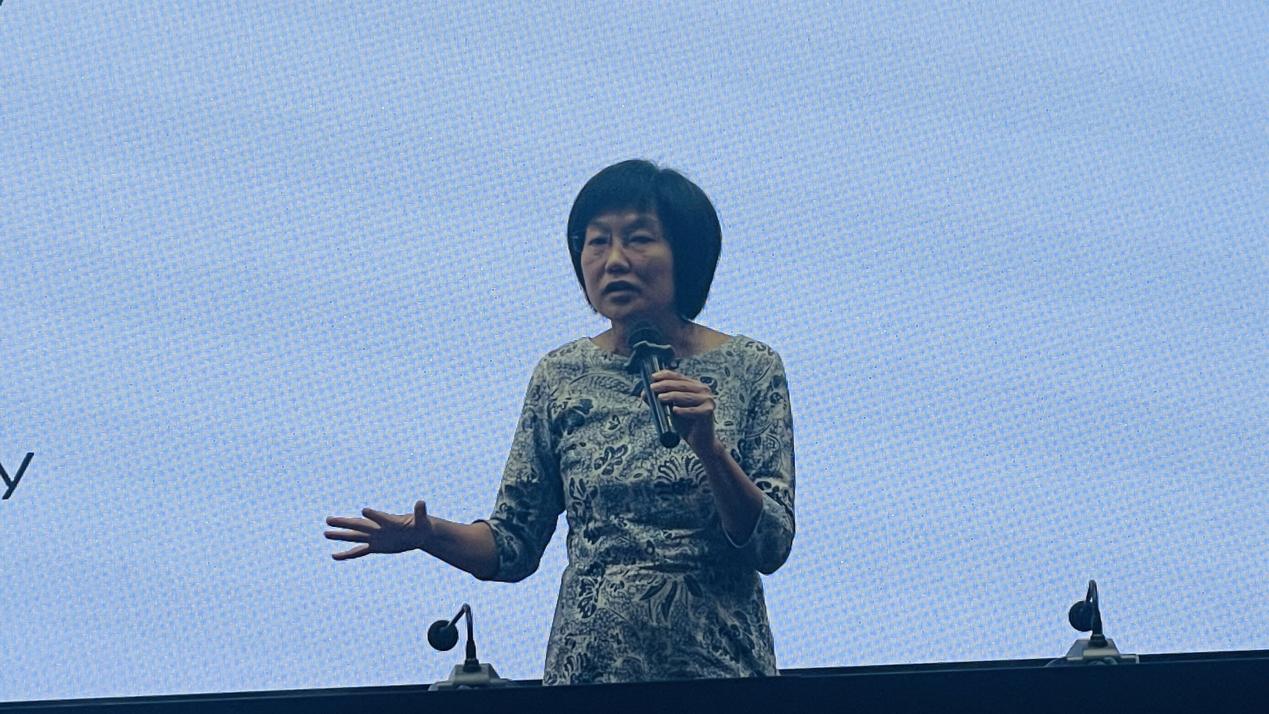
整场讲座秩序井然、学术氛围浓厚。两位专家全程采用全英文授课,搭配丰富的案例演示与对比图表,不仅有效锻炼了学生的外语听力与专业能力,也让大家沉浸式体验到纯正的国际学术交流氛围。互动环节中,现场学生踊跃发言,围绕AI英语作文批改、教师数字素养培养、高校AI教学管理政策等问题积极提问,两位专家逐一细致解答,交流探讨氛围十分热烈。
此次高水平国际学术交流活动,是william威廉中文深耕学科建设、拓宽师生国际视野的重要举措。讲座将海外顶尖高校的AI教学治理经验与国内外语教学实际有机结合,帮助师生深刻认识生成式人工智能为教育领域带来的变革,引导大家树立规范、理性运用智能工具开展专业学习的理念。
参会师生纷纷表示受益匪浅,本次讲座打破了自身对人工智能工具的片面认知,掌握了多项可应用于英语读写学习的实用方法,也对外语教育行业的未来发展形成了更前沿、清晰的认知。
Broadening International Academic Horizons and Exploring New Pathways in AI-Enhanced Teaching: A Special Academic Lecture by Experts from the National University of Singapore
(Reporter: Liu Yanjiao) To further broaden the international academic horizons of faculty and students, keep pace with the forefront of generative AI in education, and comprehensively enhance the overall competence and research capabilities of foreign language students, the School of Foreign Languages held a special lecture for the Optics Valley Academic Forum at Lecture Hall No. 1 of the University Library on the afternoon of June 12, 2026. The event invited two senior education experts from the National University of Singapore (NUS), Associate Professors LEE Kooi Cheng and Soo Yuen Jien, to deliver academic presentations. Faculty and students from the School of Computer Science and Artificial Intelligence, as well as the School of Foreign Languages, attended the lecture. The session was chaired by Liu Hui, Dean of the School of Foreign Languages.
The lecture consisted of two sessions, unfolding progressively and interlocking seamlessly, offering a comprehensive focus on how artificial intelligence empowers the entire process and all aspects of higher education teaching.
In the first half, Professor Soo from NUS delivered a keynote titled “Application and Governance of Generative AI in University Teaching: Strategy, Policy, and Faculty Empowerment.” At the outset, using the gradual popularization of computers in Singaporean classrooms as a reference, he traced the evolution of social and institutional policies as new technologies are introduced into education, drawing an analogy to analyze the opportunities and controversies surrounding the integration of generative AI into university classrooms today. Subsequently, he systematically explained the top-level strategic framework formulated by NUS in response to the widespread application of generative AI. He detailed the practical measures of the Centre for Development of Teaching and Learning (CTLT) in offering AI teaching workshops for all faculty, vividly demonstrating how universities can translate macro-level institutional guidelines into actionable and practical classroom teaching models. As a recipient of multiple top university teaching awards, Professor Soo drew upon his extensive frontline teaching and management experience to share mature practices from top overseas universities on core issues such as enhancing teachers’ digital teaching capabilities in the AI era, regulating AI tools in the classroom, and reforming teaching evaluation systems, providing profound inspiration for the audience.
In the second half, Professor LEE Kooi Cheng presented a talk titled “Integrating Generative AI Tools into the Teaching, Learning, and Assessment of English,” which was closely aligned with the disciplinary development and talent cultivation characteristics of the School of Foreign Languages. Basing her presentation on a ChatGPT English writing scoring controlled experiment, she elaborated on three experimental scenarios with different prompt designs, comparing the differences in optimizing AI-generated texts between subject-matter professionals and general users. This clearly defined the boundaries of AI tools in English writing instruction and standardized essay grading, while also sharing corresponding optimization strategies. Using authentic classroom cases in English reading, writing, and speaking, Professor LEE specifically demonstrated how to leverage generative AI for efficient pre-class lesson preparation, enriching in-class interaction, and implementing differentiated post-class assessments. Meanwhile, addressing teaching challenges such as AI-assisted writing plagiarism and factual inaccuracies in AI-generated texts, she shared mature solutions adopted by Singaporean universities that rely on formative assessment and originality verification mechanisms, offering new ideas that combine practical value with forward-thinking for foreign language teaching development.
The entire lecture proceeded in an orderly manner with a strong academic atmosphere. The two experts delivered their presentations entirely in English, supplemented by rich case demonstrations and comparative charts. This not only effectively honed the students’ English listening and professional skills but also provided an immersive experience of an authentic international academic exchange atmosphere. During the interactive segment, students eagerly asked questions regarding AI essay grading, the cultivation of teachers’ digital literacy, and university AI teaching management policies. The two experts answered each question meticulously, creating a highly enthusiastic atmosphere for exchange and discussion.
This high-level international academic exchange is a significant measure taken by the School of Foreign Languages to deeply cultivate discipline development and broaden the international perspectives of its faculty and students. The lecture organically combined the AI teaching governance experience of top overseas universities with the reality of foreign language teaching in China, helping attendees profoundly understand the transformation brought by generative AI to the education sector. It also guided them to establish a normative and rational philosophy for using intelligent tools in their professional learning.
Attendees expressed that they benefited greatly from the lecture. It dismantled their one-sided perceptions of AI tools, allowed them to master multiple practical methods applicable to English reading and writing, and fostered a more cutting-edge and clearer understanding of the future development of the foreign language education.