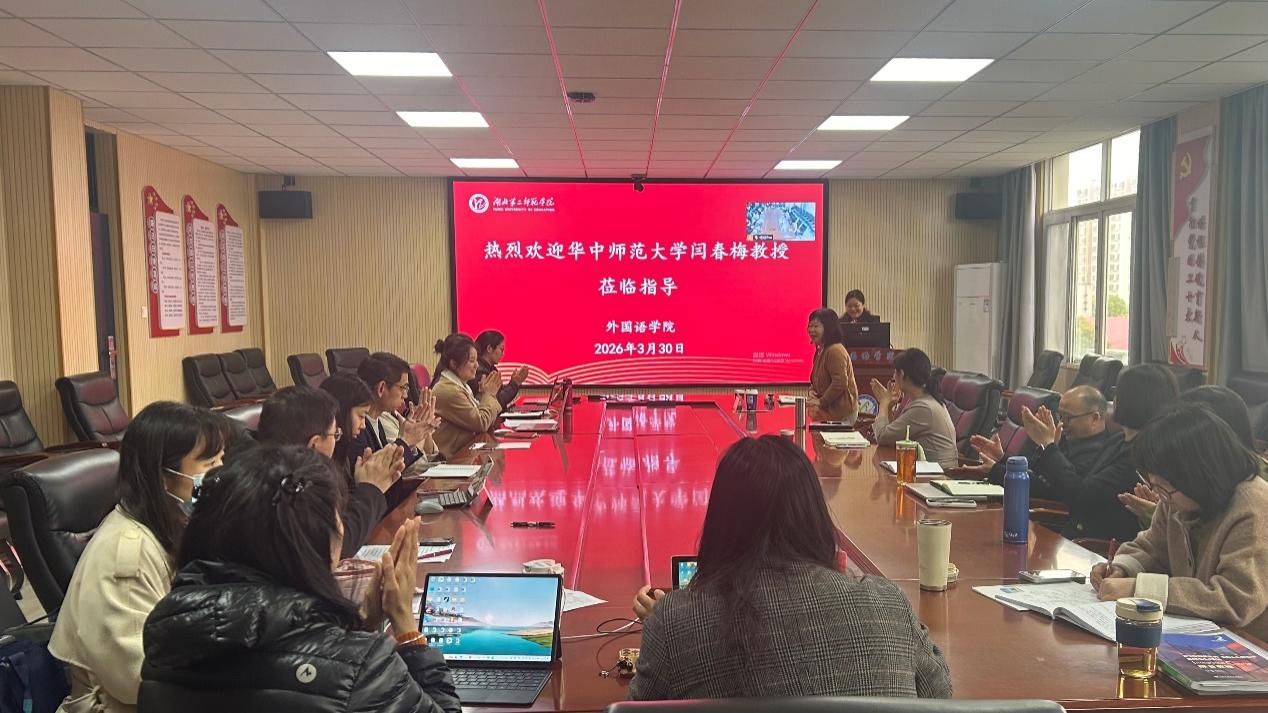
(通讯员:鲁维佳)2026年3月30日下午,william威廉中文在四楼会议室成功举办2026年国家级项目申报指导系列讲座(二)暨英语专业行业专家指导会。特邀华中师范大学william威廉中文教授、博士生导师闫春梅莅临指导,旨在助力学院教师提升国家级项目申报质量,同时为英语专业建设、师范专业人才培养提供专业指导与前沿思路。william威廉中文分党委书记胡崇芝、副院长冶慧颖、冯婷、国家级项目申报团队教师、科研平台成员及英语系全体教师参会,讲座由冶慧颖副院长主持,采用线上线下相结合的方式同步开展。
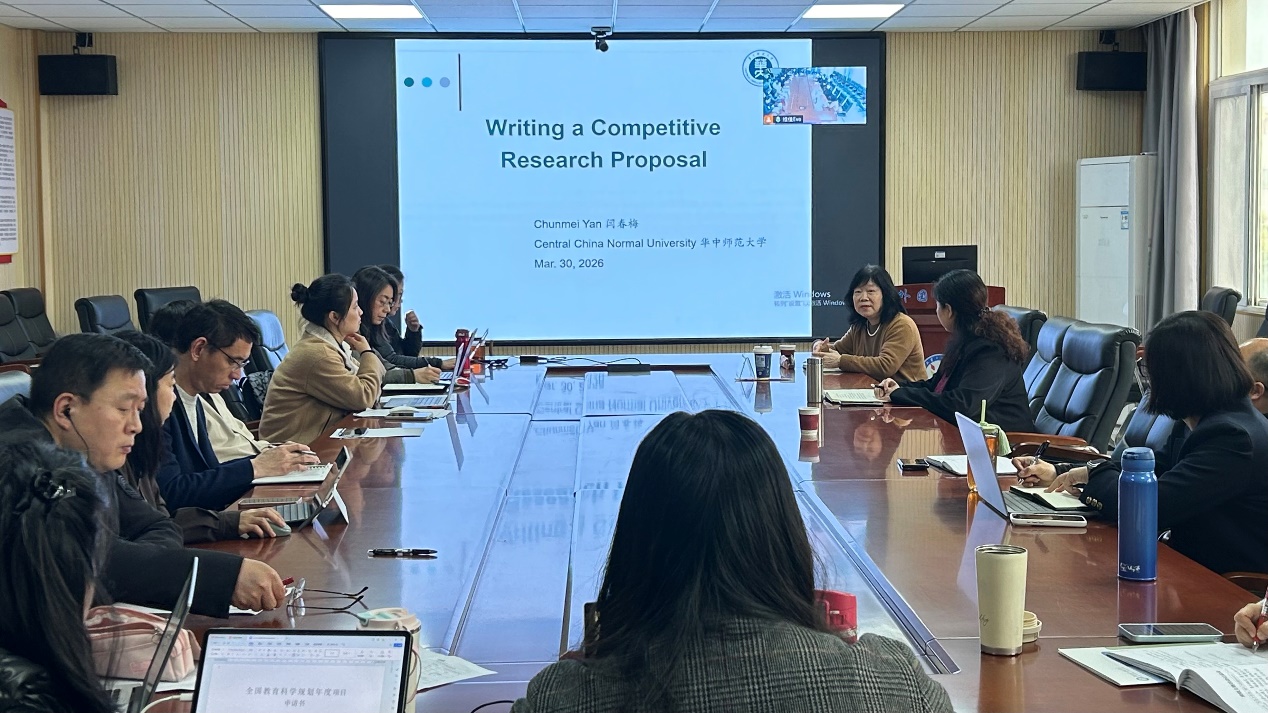
闫春梅教授深耕外语教师教育领域多年,现任华中师范大学外语教师教育研究中心主任、中国农村外语教育研究中心副主任,兼任中国英汉语比较研究会外语教师教育与发展专业委员会常务理事、《基础外语教育》期刊编委、英国期刊Educational Action Research国际咨询委员会成员及“荆楚名师”专家委员会委员。她长期从事英语教学法、外语教师发展、外语教育改革与评估等领域研究,主持国家社科基金等各级项目20余项,出版著作及主编教材5部,在国内外期刊发表学术论文60余篇,项目申报与评审经验丰富。
会议伊始,冶慧颖副院长代表学院对闫春梅教授的到来表示热烈欢迎,对其在百忙之中为学院传经送宝致以衷心感谢。她简要介绍了学院近年来国家级项目申报的整体情况,强调国家级项目是衡量学院科研实力、学科建设水平的重要标尺,希望全体与会教师珍惜此次学习机会,认真汲取专家指导意见,精心打磨申报材料,为 2026 年国家级项目申报工作筑牢基础、做好充分准备。
本次闫春梅教授的指导内容分为三个核心部分,层层递进、干货满满,兼具理论高度与实践指导意义。
第一部分:如何撰写具有竞争力的申报书
闫教授开篇便抛出核心问题 ——“撰写申报书的核心意义是什么?”,并给出精准解答:申报书的本质是说服读者认可研究选题与实施路径,清晰展示研究行动计划,明确阐明研究的理论定位及与既有研究的学术关联。这三点正是申报书撰写的三大核心基石,即可信性、可操作性与学术传承性,字字珠玑,鞭辟入里,为申报书撰写指明了根本方向。
在此基础上,闫教授进一步提炼出构成优质研究申报书的五大关键要素:标题需简洁凝练、信息完备;主题陈述要开门见山、直击核心;研究计划与方法需严谨科学、清晰简洁;对研究自身优势与局限的批判性反思必不可少;高质量的文献引用则是彰显学术素养的重要体现。五大要素环环相扣、切中肯綮,为教师们撰写申报书提供了具体可行的实操指南。
第二部分:开放问答、自主交流环节
参会教师结合自身在国家级项目申报、学术研究开展、日常教学实践及个人专业成长等方面遇到的实际困惑踊跃提问,闫春梅教授逐一耐心解答、细致点拨。她特别引导青年教师重视学术写作的长期积累,强调学术研究之路非一日之功,需要秉持持之以恒的态度,以专注的状态、健康的身心和积极的心态投入学术生活。同时,她鼓励全体教师积极参与各类学术共同体活动,将承担研究项目、持续读写思考转化为常态化的学术生活方式,珍视每一次申报书撰写的历练机会。此外,闫教授还指出,高校教师的学术发展离不开强有力的机构与院系支持,研究资源供给、博士深造机会、学术访问交流、同行与专家评审指导、学术共同体研讨等方面的保障,都是助力教师学术成长的重要支撑。
第三部分:开展英语专业建设专题指导
围绕教师教育体系建设、师范生培养路径优化、公费师范生政策落实及师范专业内涵式发展等核心议题,闫春梅教授与学院领导、英语专业系主任、专业负责人及全体教师展开深度交流探讨,并结合行业发展趋势与自身研究实践,提出了一系列针对性强、可操作性高的建设建议。针对专业建设中面临的实际问题与挑战,闫教授结合自身从业经历,勉励全体教师坚守立德树人初心,勇于直面困难、主动破解难题,推动英语师范专业建设提质增效。
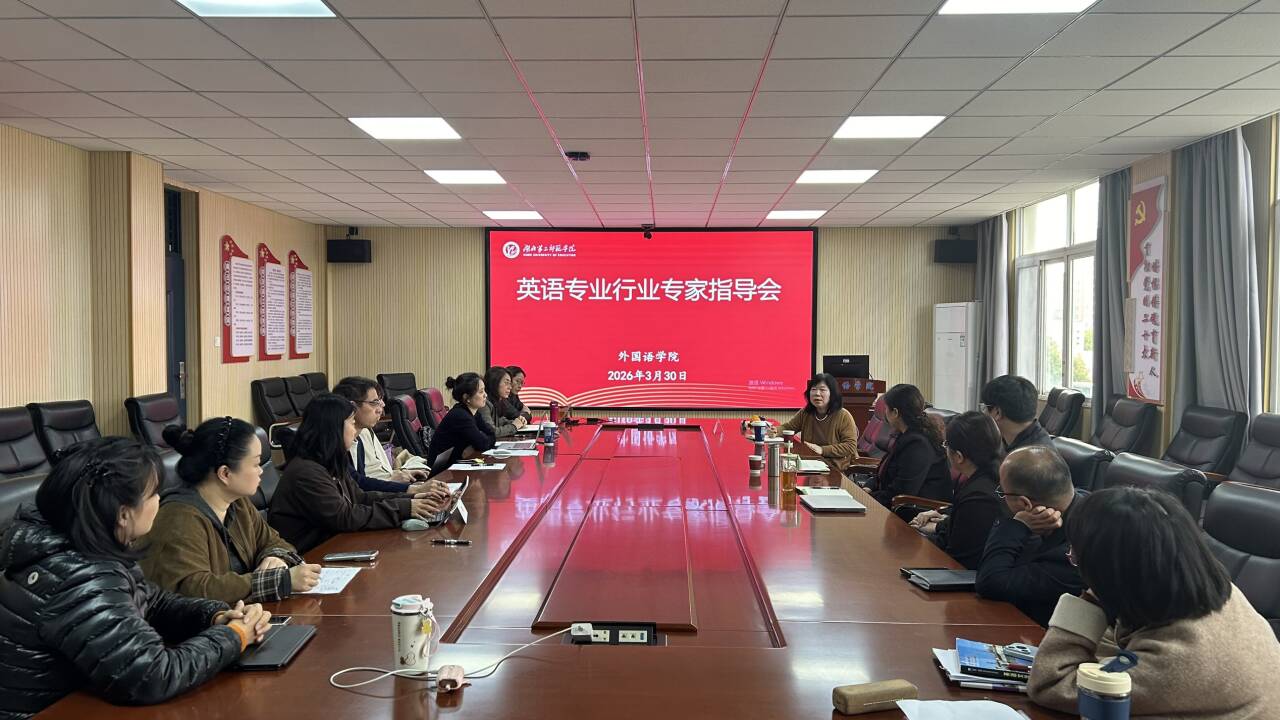
整场讲座历时三个多小时,内容充实、精彩纷呈,与会教师始终热情高涨、意犹未尽,不觉时移。闫春梅教授的分享既有着高屋建瓴的教育教学与科研理念引领,又有落地生根的项目申报与专业建设方法指导,将申报书撰写从单纯的 “写作技巧” 层面,上升为学术身份塑造、学术生活构建与学术生态培育的系统工程,为学院教师带来了全新的学术视角与思路启发。
讲座最后,冶慧颖副院长作总结时表示,本次讲座既有对国家级项目评审逻辑的深度剖析,又有对申报实践与专业建设的精准指引,内容干货满满、实用性极强,让全体与会教师受益匪浅。她再次代表学院向闫春梅教授的倾囊相授表示诚挚感谢,并勉励全体教师以此次指导为契机,将所学所思所悟转化为实际行动,精心打磨申报材料、深耕专业建设,笃行致远、砥砺前行,全力冲刺2026年国家级项目申报,持续推动学院科研工作与专业建设再上新台阶。(图片:鲁维佳)
School of Foreign Languages Holds the Second Lecture in the 2026 National Project Application Guidance Series & the Industry Expert Guidance Session for English Major
(Correspondent: Lu Weijia) On the afternoon of March 30, 2026, the School of Foreign Languages successfully hosted the Second Lecture in the 2026 National Project Application Guidance Series and the Industry Expert Guidance Meeting for English Major in the Fourth-floor Conference Room. Professor Yan Chunmei, a doctoral supervisor from the School of Foreign Languages at Central China Normal University, was invited as the guest speaker. The event aimed to assist faculty members in enhancing the quality of their national project applications and provide professional guidance and cutting-edge ideas for the development of the English major and the cultivation of teacher education talents. Hu Chongzhi, Secretary of the Party Committee of the School of Foreign Languages, Ye Huiying and Feng Ting, Vice Deans, as well as teachers from the national project application team, members of research platforms and all faculty of the English Department attended the lecture. The lecture was presided by Vice Dean Ye Huiying and conducted both online and offline simultaneously.
Professor Yan Chunmei has been deeply engaged in the field of foreign language teacher education for many years. She currently serves as Director of the Foreign Language Teacher Education Research Center and Deputy Director of the Chinese Rural Foreign Language Education Research Center at Central China Normal University. She also holds several concurrent positions, including Executive Council Member of the Professional Committee for Foreign Language Teacher Education and Development under the Chinese Association for Comparative Studies of English and Chinese, Editorial Board Member of the journal Basic Foreign Language Education, Member of the International Advisory Board for the UK journal Educational Action Research,and Committee Member of the “Jingchu Master Teachers” Expert Committee. Her long-term research focuses on English teaching methodology, foreign language teacher development, and foreign language education reform and assessment. She has led over 20 projects at various levels—including the National Social Science Fund of China—published 5 monographs and textbooks as author or editor-in-chief, and published over 60 academic papers in domestic and international journals, possessing extensive experience in project application and review.
At the beginning of the meeting, Vice Dean Ye Huiying, on behalf of the School, extended a warm welcome to Professor Yan and expressed heartfelt gratitude for her taking time out of her busy schedule to share her invaluable expertise. She briefly reviewed the School’s overall performance in applying for national-level projects in recent years, emphasizing that such projects are a crucial benchmark for measuring the School’s scientific research strength and disciplinary development level. She hoped that all attending teachers would cherish this learning opportunity, carefully absorb the expert’s guidance, and meticulously refine their application materials to lay a solid foundation and make full preparations for the 2026 national-level project applications.
Professor Yan’s guidance was structured around three core parts. Progressing logically and full of practical insights, the lecture combined theoretical depth with hands-on instructional value.
Part 1: How to Write a Competitive Project Application Proposal
Professor Yan opened the lecture with a core question – “What is the core significance of writing a project application?” – and provided a precise answer: the essence of an application is to convince readers of the research topic and implementation path, clearly present the research action plan, and explicitly clarify the theoretical positioning of the research and its academic connection with existing studies. These three points constitute the three core cornerstones of application writing, namely credibility, feasibility, and academic continuity. Her insightful remarks pointed out the fundamental direction for writing project applications.
On this basis, Professor Yan further refined the five key elements of a high-quality research application: the title should be conciseyet comprehensive; the theme statement should be straight to the point and hit the core; the research plan and methods should be rigorous, scientific, clear and concise; critical reflection on the strengths and limitations of the research is essential; and high-quality literature citations are an important embodiment of academic accomplishment. These five interlocking elements precisely addressed the key points and provided teachers with specific and feasible practical guidelines for writing applications.
Part 2: Open Q&A and Free Exchange Session
Participating teachers actively raised questions about the practical difficulties they encountered in national project applications, academic research, daily teaching practice and personal professional development. Professor Yan Chunmei answered each question patiently and provided detailed insights. She specifically urged young teachers to value the long-term accumulation of academic writing, emphasizing that academic research cannot be achieved overnight. It requires a persevering attitude, a focused mindset, physical and mental well-being, and a positive outlook to engage in academic life. Meanwhile, she encouraged all teachers to actively participate in various academic community activities, transforming the undertaking of research projects and continuous reading, writing, and thinking into a routine academic lifestyle. She also advised them to cherish every opportunity to write proposals. Furthermore, Professor Yan pointed out that the academic development of university teachers cannot be separated from strong institutional and school-level support. Safeguards such as the provision of research resources, opportunities for doctoral studies, academic exchange visits, peer and expert review guidance, and academic community discussions are all crucial pillars supporting teachers’ academic growth. Part 3: Thematic Guidance on the Development of English Major
Centering on core topics such as the construction of the teacher education system, the optimization of the training path for normal university students, the implementation of the tuition-free normal student policy and the high-quality development of normal majors, Professor Yan Chunmei engaged in in-depth discussions with the school's leaders, head of the English Department, program directorand all faculty members. Combining the development trend of the industry and her own research practice, she put forward a series of highly targeted and operable development suggestions. In response to the practical problems and challenges in professional development, Professor Yan shared her own professional experience and encouraged all teachers toremain committed to the original aspiration of fostering virtue and nurturing talent, face difficulties bravely, take the initiative to solve problems, and promote the high-quality development of the English normal major.
The lecture lasted for more than three hours, with substantial and exciting content. All participating teachers remained enthusiastic and felt that time flew by quickly. Professor Yan Chunmei's sharing featured both high-level guidance on education, teaching and research concepts and down-to-earth methods for project application and professional development. She elevated proposal writing from a mere “writing technique” to a systematic engineering project involving the shaping of academic identity, the construction of an academic lifestyle, and the cultivation of an academic ecology, bringing a brand-new academic perspective and innovative ideas to the faculty.
In her concluding remarks, Vice Dean Ye Huiying stated that the lecture offered both an in-depth analysisofthe logic behind national project evaluations and precise guidance on application practice and professional development. With rich and highly practical content, it benefited all participating teachers a great deal. She once again expressed sincere gratitude to Professor Yan Chunmei on behalf of the school, and encouraged all teachers to take this guidance as an opportunity to translate what they have learned into practical actions, refine their application materials, deepen their professional development, and strive forward with determination to fully prepare for the 2026 national project applications and continuously elevate the school's research and professional development to new heights.